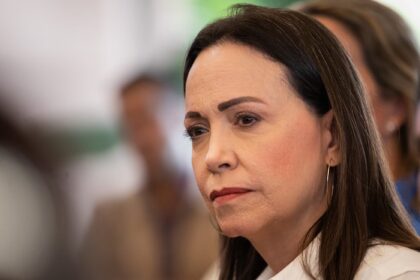



Venezuela’s acting president, Delcy Rodríguez, has signed into law a bill introducing major changes to the country’s oil sector, a move widely seen as a response to pressure from the United States to open the industry to foreign private investment.
The legislation, approved this week by the National Assembly, allows private companies to gain operational control over oil production and sales, reduces certain taxes, and provides for independent arbitration of disputes, while the state retains overall control of the sector.
Rodríguez hailed the law as a forward-looking measure. “We’re talking about the future. We are talking about the country that we are going to give to our children,” she said after signing the bill. Her brother, Jorge Rodríguez, the congressional leader, described the changes as a step toward prosperity, stating that the country must build “good things” together for all Venezuelans.
The U.S. has also eased some sanctions on Venezuela’s oil industry, with the Treasury issuing a general licence allowing transactions involving the state-owned Petróleos de Venezuela (PDVSA). U.S. officials, including former President Donald Trump, have said that major U.S. oil companies are assessing potential operations in the country. Trump described the development as a move that could bring “tremendous wealth” to both Venezuela and the United States.
The law, fast-tracked through the legislative process with a brief public consultation, permits private companies to exercise “technical and operational management” even when holding minority stakes in joint ventures with PDVSA, a departure from previous rules requiring state control over operations. It also allows for a possible reduction in royalty payments from the state’s standard 30 percent.
While analysts acknowledge that the legislation improves contractual stability and offers more flexibility on taxes, royalties, and dispute resolution, they caution that it falls short of what foreign investors require to commit significant capital. Legal uncertainties and executive discretion remain, and some experts question whether the changes will have a lasting impact.
Venezuela holds the world’s largest proven oil reserves but produces less than 1 percent of global output, down from a peak of 3.4 million barrels per day due to years of mismanagement, corruption, and U.S. sanctions. Experts say that a genuine democratic transition may be needed to make the country’s oil sector truly attractive to foreign investors and to ensure that the law cannot be easily reversed.
Despite these concerns, the new hydrocarbons law represents a significant shift in Venezuela’s approach to foreign investment, signaling the government’s intent to modernize the sector and attract capital needed to revive its struggling oil industry